If you've got a comment or suggestion about the programme, contact us
This week
Tuesday 11 July 2006
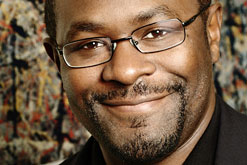
Dr Kwame McKenzie explores the mind-body connection as he examines the power of placebo.
Programme details
Crisis Resolution Teams The first crisis teams were set up in 2001 as a government initiative to try to reduce the number of psychiatric patients who were admitted to hospital. They assess patients to see if they can be treated at home or need to be admitted. Kwame McKenzie visited the North Westminster Crisis Resolution Team and talked to Mary Quirke and Michael Hunt who work in the team.
Paranoid thoughts Ok - so you've had a bad day and think everything and everyone is against you. But what if the next day is the same? And the next?
Researchers at Kings College London have been collecting examples of paranoid feelings to find out just how common they are.
Dr Daniel Freeman joins Kwame McKenzie to talk about his research and the book that accompanies it - Overcoming Paranoid and Suspicious Thoughts: A self help guide.
The Placebo Effect A simple sugar pill, or placebo can sometimes be just as effective in relieving symptoms as genuine medication. Experiments have shown that the power of placebo can work - just as long as the patient believes the pill they're swallowing contains the drug in question. But the mystery remains - how exactly does the mind bring about a cure?
Professor Nicholas Humphrey, an evolutionary psychologist from the London School of Economics and Dr Dylan Evans, a senior lecturer at the University of the West of England join Kwame McKenzie to discuss.
Additional Information
Daniel Freeman, "Overcoming Parnoid & Suspicious Thoughts" by Daniel Freeman, Jason Freeman and Philippa Garety, published by Constable and Robinson, ISBN: 1845292197
Dr Dylan Evans, author of "Placebo: The Belief Effect", published by HarperCollins, ISBN: 0007126123