|
The Dee Estuary
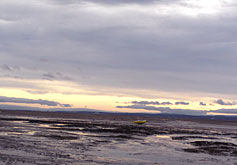
The channel of water in the north west of England flows between the Wirral on one side and North Wales on the other is a treacherous stretch of water. Those who live and work along it must always be aware of the changing tides. It’s also a special area for flora and fauna, despite being close to two major urban connubations and site of various industrial plants.
The Ramsar Convention
on Wetlands
Wirral Nature Conservation
Helen Mark drives to Hilbre Island, two miles off shore from the Merseyside town of West Kirby to meet Dave Cavanagh, the resident warden, about his work as guide to the visitors who walk out to the island to take in the spectacular views and spot birds, seals, dolphins and occasional whales which inhabit the estuary. He tells her how, although it can be a solitary life being cut off from the mainland twice a day, he feels part of the island and loves living alone there.
Birdwatchers go Hilbre Island to view a vast array of different birds and stay for up to a month at a time. Pete Thomas has been going since 1959 and talks passionately about the variety of waders, birds of prey and osprey that use the estuary as a feeding ground en route to both warmer and colder climes. "Once you catch your first bird, you’re hooked for life," he enthuses. He and his fellow bird watchers have built up the observatory over the last 40 years, not only in the facilities it offers those who visit, but in terms of the data they record on migratory patterns of different bird species.
Hilbre Bird Observatory
and Ringing Station
Because the Wirral is so close to Liverpool and Manchester, it attracts a lot of visitors who come to enjoy the beaches and the scenery. The wildlife along the estuary often has to contend with dog walkers, horseriders, wind surfers, water skiers as well as with those who fish the waters. The threat to birdlife along the shore at West Kirby was once so great that there was a dramatic decline in bird populations. Wirral Borough Council initiated a voluntary warden scheme and enlisted the help of bird enthusiasts such as Karen Leeming to help educate the public about birds and how to minimise disturbance. She goes out a couple of times each month and gently steers people away from roosting flocks of birds. She says a friendly approach convinces most people to make sure they don’t damage the birds’ habitat, but in the beginning there was sometimes open hostility from members of the public who didn’t like being told to tread carefully. The wardens have learned to involve people in bird conservation and this approach has paid off.
Fishing has always been part of life on the Dee Estuary and the cockles and mussels that are harvested can provide a good income, but overfishing is depleting cockle stocks and threatening the livelihoods of local fishermen. Steve Dobson tells Helen there's another threat too because of illegal cockle fishermen who descend on the shores of the Dee on open days and gather as many cockles as possible, selling them for export at a vast profit.
To combat overfishing, the Environment Agency has officers who patrol the area. Keith Williams, Chief Officer on the Dee, has the same powers of arrest as the police. He apprehends fishermen who break the laws set down by the Agency. He takes Helen out to let her see him at work, talking to local mussel fishermen as they land their catch and observing the estuary from Thurstaston beach.
Environment Agency Wales
Email Open Country: open.country@bbc.co.uk
The BBC is not responsible for external web sites
|