|
Richard Uridge travels to the Isle of Wight for this week’s Open Country and meets:
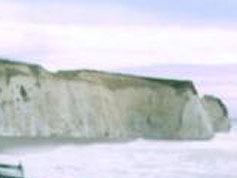
Ian Boyd of Island 2000 at Whale Chine.
Chines are the remains of deep-cut river valleys which lead down to the sea. The term "chine" is only used on the Isle of Wight and parts of Dorset and Hampshire. As the walls of the chines and cliffs of the south coast of the Isle of Wight are so unstable and erode continually, the strata is clearly visible, with 65 million years of geological history clear to see. Chines are very important for their fossil records, their archaeology and their unique flora and fauna.
There is also some fascinating folklore attached to the chines because of their history with local smuggling, fishing and shipwrecks.
Isle of Wight Cams including Whale Chine
Jill Reilly, Industrial Archaeologist, Beehive Down draught Brick Kiln
Jill shows Richard the only complete brick kiln remaining on the Isle of Wight. Dome-shaped, like an old-fashioned bee-hive, with a down-draught chimney, this kiln was used to fire bricks from the 1930's to the 1950's. As well we bricks the kiln also fired ridge tiles, chimney pots, gate posts and dragon-shaped finials.
Brick making on the Isle of Wight
Richard Grogan of Wight Wildlife
Richard Grogan shows our own Richard the wall lizards living in and around the walls of the municipal car park at Ventnor. It was a perfect lizard-spotting day, not too hot, not too cold, so they were lying, bellies flat against the brick-work, soaking up as much warmth as possible. The Wall Lizard (Podarcis muralis) has long been a feature of the walls and gardens of the area around Ventnor Bay. These small green and brown reptiles are taking advantage of the warmth and sunshine of south east facing bay, away from the prevailing south west and cold north winds. Active throughout the summer they are an intriguing addition to the Island's varied wildlife and are also a unique population of endangered species.
Hampshire and Isle of Wight Wildlife Trusts
Andy Gillian, author of Wight Air Wrecks
Although the Isle of Wight is a small island, approximately 145 square miles, there have been over 300 military air crashes since 1913 - far more than you’d expect on an area of this size. World War Two dog-fights obviously played a part (28 planes came down in just one day during the Battle of Britain), but the topography of the island is also significant, with many ‘high-ground’ incidents. Andy took Richard up the hill behind Ventnor, to St Boniface Down, the site of a tragic plane crash which led to a significant development in aviation safety.
Military air losses around the Isle of Wight
Colin Boswell, Garlic grower
For 25 years Colin has been growing garlic on the Isle of Wight, and this year has been one of his best yet. Thanks to the poor harvest in France (it was just too hot over there) he actually exported some Wight garlic to a French company - truly an example of selling coals to Newcastle. Richard samples, raw, some of Colin’s finest garlic - and lives to tell the tale.
The Isle of Wight Garlic Festival
The BBC is not responsible for external web sites
|