Oil and shipping: Africa get way out as crisis continue for Strait of Hormuz?
Wia dis foto come from, Getty Images
- Author, Marco Oriunto
- Reporting from, London
- Author, Makuochi Okafor
- Reporting from, Lagos
- Read am in 4 mins
As di war for Iran continue, kontris throughout Africa dey feel di impact. Some go lose sake of higher oil prices and closed shipping lanes, but odas fit gain from new trade routes.
Nigeria: Oil-rich but squeezed
Nigeria na di second highest oil producer for Africa afta Libya. Wit di price of crude wey dey rise, Nigerian officials dey signal say dem fit pump more oil to help respond to global demand.
But even if di Nigerian govment do dis, ordinary pipo fit no feel di benefits sake of di inadequate oil refining capacity for di kontri.
Nigeria dey ship most of dia crude oil abroad to be turned into diesel, petrol and oda products, dem bring dem back at global prices.
As many shipments don hook for di Strait of Hormuz for Iran, prices of petroleum products for Nigeria also dey affected, wiping out di gains from selling oil.
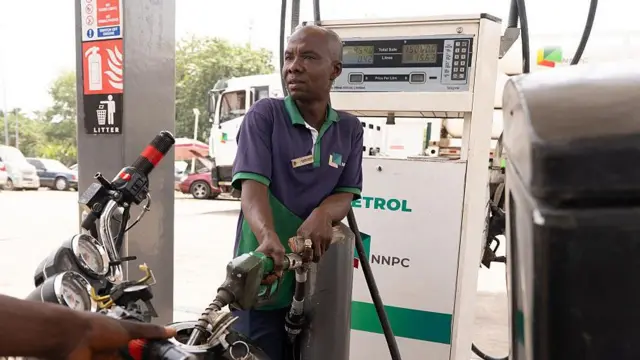
"If international petrol prices rise, transport costs go increase evriwia," Dumebi Oluwole, one sabi pesin for oil mata tok.
"Fuel don almost double, if not triple," Morounmubo Akodu, one small business owner for Lagos tok.
"I try to work only when e dey very necessary just so I fit manage di cost."



End of Di one wey oda users dey read well well

In addition to fuel costs, food dey likely to become more expensive and inflation go worsen, leading to all round higher cost of living.
While di govment fit dey earn more from oil exports, many Nigerians dey face higher living costs for di foreseeable future.
Egypt: Suez under pressure
As shipping routes don dey disrupted, Egypt dey already lose revenue from di ongoing war.
Dia Suez Canal na key route for ships wey dey carry oil and oda goods betwin di Gulf and Europe.
Since hostilities start, major shipping companies don divert vessels away from both di Strait of Hormuz and di Red Sea sake of missile and drone attacks.
Dis don sharpaly reduce traffic and revenue for di Suez Canal, e make imports dey more expensive and e dey push up prices for home.
"Di Egyptian pound don lose approximately 7%," economic sabi pesin Dumebi Oluwole tok.
"Dat na bicos di Suez Canal, wey be key route for di movement of almost all di crude oil and oda commodities to Europe, dey essentially blocked."
South Africa: Chance for more business
However, further to di south, some African economies fit don see new opportunities.
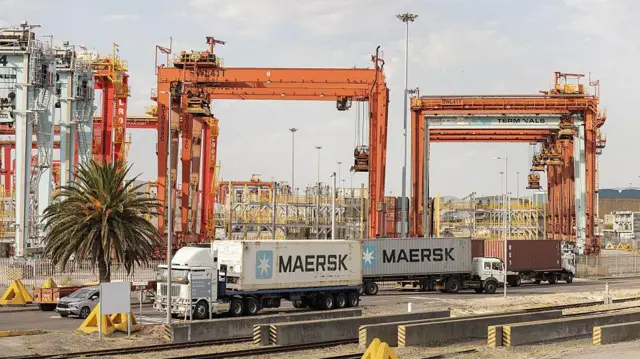
Maersk and Hapag-Lloyd, wey dey among di largest container shipping companies for di world, announce for March dis year say dem go reroute some of dia main Middle East services around South Africa Cape of Good Hope.
As tankers and container ships dey avoid di Strait of Hormuz and di Red Sea, more vessels dey sail around di southern tip of Africa, creating new opportunities for ports for di region, especially for South Africa.
Wia dis foto come from, Getty Images
"Di new, longer routes go put plenty pressure on top many of di offshore port areas for southern Africa – Walvis Bay, Cape Town, Durban, Maputo, Dar es Salaam," Timothy Walker, Senior Researcher for di Institute for Security Studies, tok.
For di beginning of March, South Africa Cape Chamber of Commerce and Industry bin record 112 percent rise for vessels wey bin stop for di Port of Cape Town.
"While di potential dey for commercial opportunities for bunkering, ship repair and maritime supplies, e also get infrastructure constraints," Jacques Moolman, di President of di Cape Chamber of Commerce and Industry, tok.
Transnet National Ports Authority (TNPA), wey be di state-owned body wey own and dey manage di eight commercial seaports, don confirm plans for new floating dock for Cape Town and dem launch series of improvements to boost di local ship repair sector.
Howeva, di outlook for South Africa still dey mixed. As di kontri dey import large share of dia fuel, higher global prices and delayed deliveries go impact consumers and businesses, even if di maritime sector dey grow.