'Di hair weavon and attachment you dey wear fit contain chemicals wey fit make you get cancer' - Researchers tok
Wia dis foto come from, Getty Images
- Author, Esther Kahumbi
- Role, Global Digital Health
- Read am in 7 mins
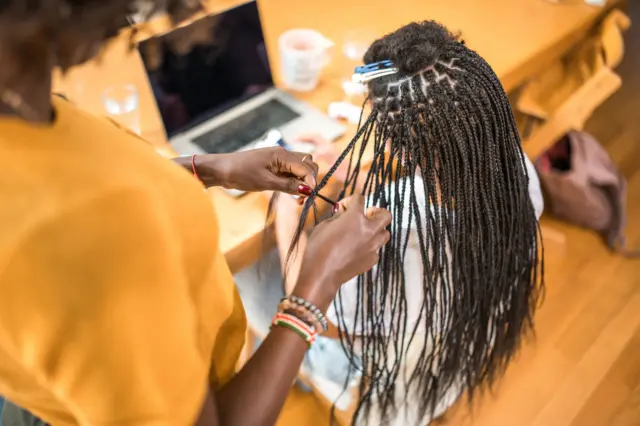
Hair extensions wey dey popular as attachment, weavons or human hair wey millions of women around di world dey wear fit contain chemicals wey dey linked to breast cancer, hormone disruption and reproductive harm, according to di largest study of dis kind.
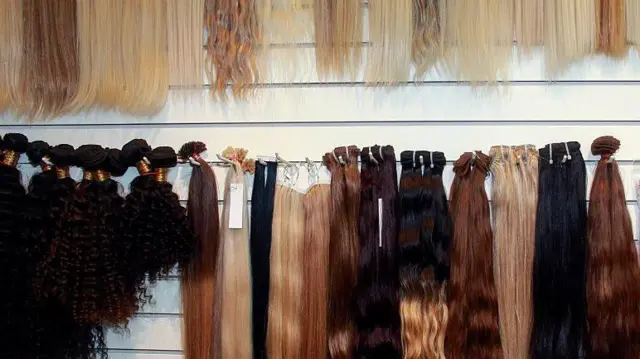
Scientists find nearly 50 hazardous chemicals inside nearly evri sample wey dem test for di range of synthetic and human hair products wey include wigs, braiding hair, weaves and wefted hair like clip-ins.
Di findings, wey dem publish for di American Chemical Society journal, don raise calls for stronger regulation of di multibillion-dollar industry and greater transparency for consumers.
"We dey trust companies wey no get any requirement to create and produce products wey dey free of some dangerous chemicals," Na wetin Dr Elissia Franklin, wey be di study lead author tok.
Hair extensions dey pose particular risk becos pipo dey wear am for long periods and e dey remain in close contact wit di skin, the scientists tok. Dis serious exposure fit contribute to long-term health risks.
"Pipo dey wear hair attachments veri intimately," Franklin tok. "Di (extensions, attachments) dey sidon for di scalp, on your neck and pesin for multiple weeks if not months at a time."
Hazardous chemicals
Wia dis foto come from, Getty Images
Di global hair extension market dey projected to surpass $14bn by 2028.
While many women choose extensions for cosmetic or fashion reasons, one large percentage of consumers na black women wey see am as a convenient way to manage dia hair, di study tok.



End of Di one wey oda users dey read well well
Synthetic hair fit cost as little as $20, while premium human hair extensions fit cost thousands of US dollars.
For di 43 samples wey dem test, scientists find 170 chemicals, dem use one technique wey allow dem to detect a wide range of substances instead of to focus on a specific one.
Out of di 170 chemicals, 48 chemicals dey for di major international hazard lists wey include di ones wey United Nations and di European Chemicals Agency compile.
"E include evritin from flame retardants to pesticides, to tins like phthalates wey be endocrine disruptors and e dey known to dey associated wit reproductive harm," Franklin tok.
Dem find seventeen chemicals wey dey linked to breast cancer inside 36 hair extension samples - both synthetic and human hair - while nearly 10% of di samples contain hazardous organotin compounds wey dem dey commonly use to make fire-resistant plastics.
Di scientists say dem bin dey surprised to find organotin compounds, wey normally no suppose dey in side consumer products.
Dis chemicals dey linked to skin irritation since and dem also sabi dis chemicals to be endocrine disruptors, wey mean say dem dey interfere wit hormones wey dey control many processes for di body including fertility and development.
Di chemicals wey dem see well-well across di samples include phenol, wey dem dey use to make plywood and oda wood adhesives, and bis (2-ethylhexyl) phthalate, one substance wey dem dey use to make plastics more flexible.
Researchers say di chemicals dey trigger biological changes like di ones wey dey caused by known breast carcinogens and fit increase di risk of breast cancer ova time.
Human hair dey safer?
Wia dis foto come from, Getty Images
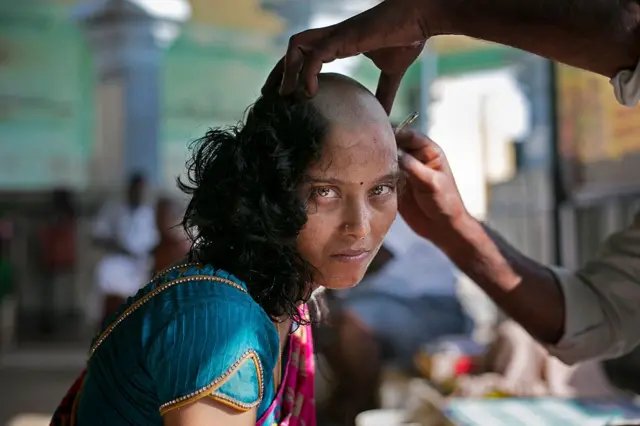
Previous studies bin don focus largely on synthetic hair, wey sabi pipo find out say e bin contain hazardous metals, but dis study also test 11 samples of virgin, raw and mixed human and synthetic hair.
Virgin and raw hair dey more expensive, and dem dey market am like say e neva get any chemical treated. Raw hair na specifically and usually complete hair wey dem neva process wey dem just cut or shave directly from a single donor.
In some cases, di samples of human hair - including di ones wey dem label as virgin and raw - get more hazardous chemicals dan some synthetic versions, wey include plenti chemicals wey be endocrine disruptors.
"Just becos dem label a product as human hair or dem label am as natural from a single donor no mean say e dey safe pass synthetic hair," na wetin Franklin, a research scientist for di US Silent Spring Institute wey study environmental causes of breast cancer tok.
"Cases bin dey wey for di synthetic sample, we identify one chemical wey dey for hazard list, but for human hair, e fit reach like five to seven wey dey for di hazard list," she explain.
Dem fit introduce dis chemicals during manufacturing or processing, wen dem dey treat di hair to improve di appearance, durability or management, researchers tok.
While di study no assess di levels of di hazardous chemicals, some like hormone disruptors fit dey harmful even in low doses, Franklin say tok.
Di lack of clear safety limits for chemicals inside hair extensions wey dem no set for manufacturers na one of di researchers' big concerns.
"E no get any reason wey go justify hazardous chemicals inside products wey we dey use for cosmetic purposes. We don already dey exposed to too many chemicals daily wey we no fit avoid," Franklin tok.
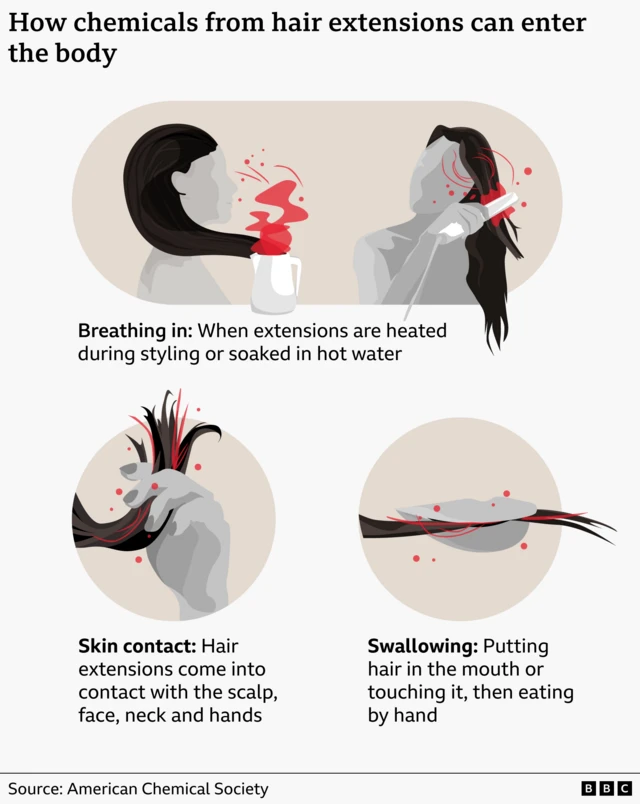
Dem dey heat many attachments or dip am inside boiling water to style am, and e fit release toxic fumes. Dis chemicals fit enta di body wen you breathe am in.
Dem fit also enta di body through skin contact, wey no dey affect only di end user, but hair stylists too wey dey provide dis services, researchers tok.
Some pipo dey report physical reactions to hair attachments including itching and redness, rashes and swelling for dia scalp, neck and face, and in some rare cases, dem dey get breathing issues.
Wia dis foto come from, Getty Images
How you fit use hair attachments safely?
No proven way dey to use hair attachments wey dem treat wit chemicals. safely and even measures wey dem dey tink to put wey go reduce exposure fit no dey reliable, na wetin di study find out.
If you wash am first bifor you use am, for example to use vinegar to reduce irritation, e no also produce conclusive findings wey concern safety.
For di study, only two of di 43 samples wey dem test na im no get any of di hazardous chemicals wey di scientists identify.
Dem label di two "non-toxic" or "toxic free". But Franklin say dat kain claim fit be to give false reassurance.
"Doz terms no dey regulated by any organization so companies just dey slap am ontop di product and no consequences at all".
For di UK, new stricter rules on harmful carcinogenic substances go come into force for August 2026, but hair industry professionals say di gap for regulation of hair attachments means say consumers no dey fully protected.
Cosmetics dey strictly regulated and dem dey undergo safety assessments, but hair attachments dey mostly classified differently, so dem no dey assess am..
Dem bin don also link hair dyes and straighteners (relaxers) say e dey linked to increased risk of breast cancer for previous studies. However, unlike hair attachments dis products dey regulated as cosmetic products and dem dey undergo safety tests.
"Regulation dey only work if products dey correctly classified and enforcement dey active from di point of import and sale," na wetin Caroline Larissey, chief executive of industry body for UK National Hair & Beauty Federation tok.
"Dis na genuine gap, and dis research make am clear say e need to dey addressed."
For 2016, di BBC bin find out say plenti mislabelling bin occur during processing, and dem dey leave am mostly to di integrity of di traders to specify di hair type.
Some manufacturers websites dey suggest ways for consumers to check di quality of di hair bifor dem buy am. But di scientists say dis work no be dia responsibility.
"If dem no dey for market at all, we for no even get any chance to choose," Franklin tok.
"Anybody wey dey use hair attachments need to dey concerned wit dis findings."