| 13 November 2014 |

|
|
| BBC Homepage | | |
| |||
| Contact Us | | |
Places featuresYou are in: North Yorkshire > Places > Places features > A potted history 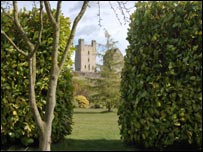 A potted historyBy Chris Bellingham The history of Helmsley Walled Garden dates back to the nearby 13th century Castle. But, after years of neglect, it took one woman's vision to lovingly restore it back to its former glory. The military might of Helmsley Castle was only tested once, being besieged during the Civil War and starved into submission by the Parliamentarians. Musket balls can still be found today in the ground here! The fortifications of the castle were dismantled, but the Elizabethan manor house was spared. The estate passed to the Duke of Buckingham, but it was sold on his death in 1687 to clear his gambling debts. The Helmsley Estate was bought by Charles Duncombe. He paid £90,000 for 40,000 acres. That was a huge sum of money, but he was one of the three richest commoners in the country at the time. When he died in 1711 without an heir, the estate passed to his sister. However, she didn’t want it as she already had a substantial estate. So the estate passed to her son, thus 28-year-old Thomas Brown found he had inherited 40,000 acres of Yorkshire. He changed his name to Thomas Duncombe and built the big house at Duncombe Park. The BBC is not responsible for the content of external websites 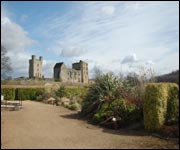 Helmsley gardens The first walled garden producing fruit, vegetables and cut flowers for the big house had been built around the same time as the house. By the mid 1800s the walls contained glasshouses and structures for growing exotic fruits not normally found in England. There were about 20 gardeners working within its walls, feeding the big house. The Duncombes became earls of Feversham. It seemed like the good times would never end. But, in the early years of the 20th century, things changed. In 1914 the gardeners responded to the call to serve their country and went off for their great adventure, safe in the knowledge that they would be back by Christmas. But they weren’t. That was not the whole story. The first earl died in 1915; the second earl was killed in the war in 1916; and the third earl inherited the estate at the tender age of ten. His mother felt that her son should not be brought up in the big house, and the trustees let it out as a girls’ school from the early 1920s. Since the school had no need of a walled garden requiring 20 gardeners, it was abandoned. When the Earl died in 1963, the title died with him and there was no son to inherit. The estate couldn’t pass to his daughter, and a male heir had to be found. A distant cousin aged 18 was summoned from South Africa to take charge of his inheritance. The school moved when the lease expired in the 1980s. The family moved back into the big house, and began restoring it to its former glory. 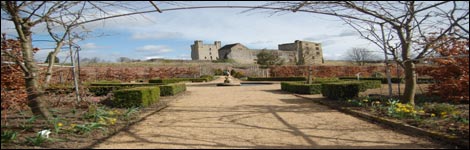 After the war, there had been some attempts to use the walled garden. A market garden had operated from within its walls. A local greengrocer had used some of the buildings to grow fruit and vegetables, but by the mid 1970s the walled garden lay abandoned, to be reclaimed by nature. The Seeds of an IdeaThen Alison Ticehurst came along. She had a vision. She knew this place could be used and she knew what she would use it for; a healing garden offering horticultural therapy and a tranquil environment for those in need. She built up a group of volunteers and set about clearing the space, raising funds, negotiating with the estate, promoting the vision. Old maps were used to establish what had been within the walls. Paths were uncovered. Then, where the paths crossed in the middle of the garden, the diggers struck stone and the old dipping pool was uncovered. The structure of the garden was still much as was shown on the 1846 map. Fate intervened and Alison died before the garden opened. She was not to see the fruits of her labours. But, in the long months spent clearing the dereliction, she had built such a momentum and such a strong group around her that this continued in her absence. It took two years to reach the point where paying visitors could be invited in. With the help of a large group of volunteers and funding from wherever it could be found, the garden was laid out and planted. The buildings were repaired and restored. The Northern Fruit Group helped plant and maintain the orchards, and the Clematis society brought their most northerly collection to our walls. The BBC is not responsible for the content of external websites 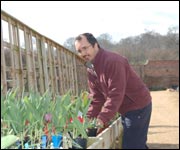 Helmsley gardener Chris Bellingham A blooming gardenIt takes a lot of time, effort and hard work to maintain a garden so varied and so large! Those who visit can enjoy an abundance of plants, flowers, fruit and trees, but it's the quiet areas of contemplation, such as the Princess Diana White Garden, that really make the garden special. The team are always developing new ideas for the garden, so with preparations for Ginny's Garden of Contemplation underway, this healing and sensory garden will be a perfect addition to the tranquility of the area. Chris Bellinghamlast updated: 08/04/2009 at 18:36 SEE ALSOYou are in: North Yorkshire > Places > Places features > A potted history |
| | About the BBC | Help | Terms of Use | Privacy & Cookies Policy |