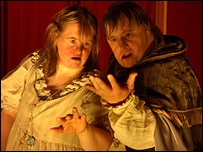
In The Footsteps of Mr Butler is a play that follows the fortunes of a group of actors touring with their production of Sheridan's The Rivals. The play is set early in the 19th century and explores the relationships between the actors, and the nature of family. The leader of the troupe, Samuel Butler, is the fictitious son of the real-life actor-manager of the same name. Samuel Butler senior has died, but the other actors realise that the show must go on - and this is where the play begins.
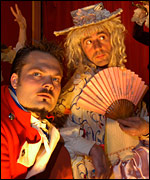 | | My name is Emily... |
Despite his death, Samuel Butler casts a shadow over both his biological family and the other members of the troupe, who have a new addition to their ranks. This is a man known as ‘The Actor’. In the Footsteps of Mr Butler is co-written by Ian McMillan and Jon Palmer. McMillan also plays Samuel Butler junior. The play is created by Full Body and The Voice, a production team that includes performers with learning disabilities. | "McMillan plays a very likeable and engaging Samuel Butler, a man slowly coming to terms with the fact that he will never be his father." | |
McMillan plays a very likeable and engaging Samuel Butler, a man slowly coming to terms with the fact that he will never be his father. Terence Mann plays James Butler, (the younger son of the original Samuel Butler) someone who wants to embrace the change his brother resists and move to America to pursue his acting career. He is held back partly by his belief that his other brother George (played by Kevin Dyson) will not be able to cope without him. As the play progresses James realises (as does George, in several heartbreaking, hilarious and truly brilliant scenes) that George has more strength and depth than he is given credit for.
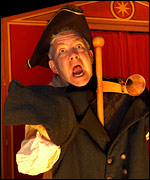 | | It's all in the expressions... |
The elder Butler's influence has clearly been huge on everyone in the troupe and the play shows how people's desires and expectations of themselves change after his death. The play illustrates how the family of Butler and the actors who have always been led by him go about finding their voices after his death. This is very important for the characters in the play itself but it is clear that finding a voice - and using the voices that they have been given - is important not just for the characters but also for those in life who can often find it difficult to be heard. Perhaps we all just need to listen that little bit harder. Robin Lewis and Kate Light |