Holding the line: Storytelling, gender and safety in the age of AI
Our senior gender advisor Becky Palmstrom looks at how new technology is reshaping women’s rights – and where we go from here


It’s a stark figure: 31 years after the Beijing Declaration pledging action on the rights of girls and women, in nearly 70% of the world, women still face more barriers to justice than men.
In the era of Epstein files, the scrubbing of diversity and inclusion language for fear of political backlash, and a whole new frontier in information technology presenting new challenges and new tech-facilitated harm, it feels like we are fighting the same old battles – but in unfamiliar and fast-changing battlefields, where holding the line is even more difficult. A new survey reinforces this - finding that social media is playing a major role in reinforcing traditional gender roles and attitudes.
The power of media
We’ve been working for years to hold space for women’s voices, needs and issues, using the power of media and trusted information to reflect change and challenge traditions and norms.
In Afghanistan – before the fall of Kabul to the Taliban in 2021 - our flagship debate-and-discussion programme, Open Jirga, could bring women into a televised national debate as active participants, asking questions to male and female panellists. The proportion of women in studio audiences, asking questions and on the panel was increased deliberately, as our producers highlighted and catalysed the broader shift happening in the country and made it visible for audiences nation-wide.
In Sierra Leone, Wae Gyal Pikin Tinap (When a Girl Child Stands) tackled community expectations and social norms limiting girls’ education and opportunities. In India, the television and radio drama AdhaFULL told the story of a group of young people in a small town who worked together to set things right, taking on issues such as underage marriage, sex-selective abortion, gender stereotyping, sexual health, education for girls and gender-based violence. For audiences it not only made girls feel more supported, but shifted the attitudes of young men to challenge traditions and norms about masculinity that sustain inequality.
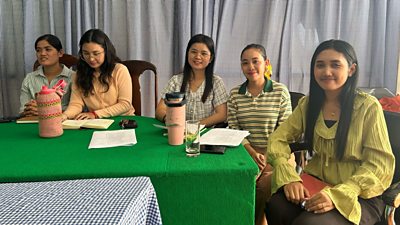
And in Cambodia our drama series (Sok San Family), digital content (Ban Der Ban Deng), social media, and community outreach engaged over 2.5 million Cambodians aged 15–55 to promote inclusion, empowering young women, non-binary individuals, and marginalised groups to take active roles in their communities. The project demonstrated that combining media storytelling with grassroots outreach can create lasting civic change at scale.
Practical decisions around whose stories are told
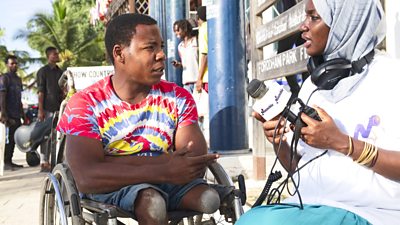
None of these were abstract commitments to inclusion. They involved practical decisions about who stands in front of the camera, who sits in the audience, who holds the microphone, who the lead characters are and who asks the questions, ultimately influences whose stories are told.
Across the countries where BBC Media Action works, women have been holding the line in this way for years. From the Solomon Islands to Somalia, Ukraine to Gaza, women host, produce, report and debate in environments where the very act of speaking publicly is itself not neutral.
This work has always been about more than media programmes. It is also about shaping the media ecosystems that influence what societies see as possible, legitimate and normal.
The line has always required effort to maintain. But it is harder than ever to hold.
AI bias: who shapes the systems
Artificial intelligence is transforming media ecosystems at an unprecedented speed. It can enable accessibility and efficiency at scale, but it can also generate convincing disinformation, automate harassment and amplify misogyny at scale. AI-bias is not just algorithmic, it is trained on data and shaped by design choices that reflect existing structural biases, including the over-representation of Western-centric and patriarchal norms.
If pursuing truth and creating trusted spaces for dialogue and improving inclusion was hard won before, they are harder still in digital environments shaped by algorithms driven by profits rather than the public good. The struggle is therefore not only about the accuracy of information. It is about power in the systems that produce it: whose voices remain visible; whose stories are amplified; who shapes the governance, regulation and creation of these technologies; and ultimately, what futures can be imagined.
At BBC Media Action, our work has always been about strengthening trusted media-ecosystems information and championing inclusive, authentic representation both on and off air. We have seen how our work can contribute to shifting social norms and how representation on air can alter expectations off air, but as AI reshapes how information is created, distributed, discovered and monetised, we must support Global Majority creators – particularly women - to have greater agency and power to shape AI-mediated media environments and AI itself.
Looking beyond safety in the digital environment
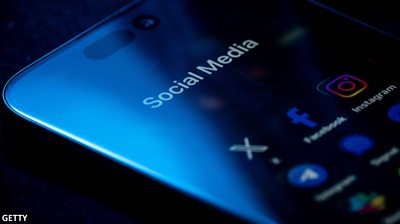
Research shows many women journalists experience online violence. Many describe how abuse effects what they are willing to write about or how visibly they want to appear. AI does not automatically create hostility towards women, but it accelerates and packages it for distribution through systems that reward outrage.
Women journalists need protection, peer networks and digital resilience. They need support to understand and use new tools ethically and they need to be equipped, not displaced, during this technological transition.
But protection alone is not enough.
Imagining different futures
The reason misogyny spreads so effectively online is not only a question of technology. It is so compelling because it rests on ancient narratives about gender and power. If those narratives remain intact, new technologies will simply magnify them.
This is why the response cannot focus only on safety. We need to look at narrative change: We want to explore how to harness the agency of men and women who witness online abuse and who might interrupt it; digital media literacy programmes that help audiences understand how algorithms shape what shows up in their feed; and creative initiatives where storytellers, including those working in the most restrictive contexts, can imagine and produce narratives that explore more equal futures.
Storytelling has always been part of holding the line. It shapes what feels possible, normal and legitimate.
Holding the line means protecting the women - and men - who are already creating space for inclusive dialogue and trustworthy, accurate, authentic storytelling, but it also means ensuring that as media ecosystems evolve, those women are not pushed to the margins of shaping what comes next but are at the heart of shaping it. It also means harnessing new technologies to imagine and ultimately create a more equitable world.
At the Commission on the Status of Women in New York, BBC Media Action will be hosting a small closed-door conversation to explore these questions with colleagues from across media, technology and gender equality. We will explore how lessons from decades of work on narrative change and gender inclusion can help shape a more equitable AI future.
Our impact areas
-
Building stronger democracies
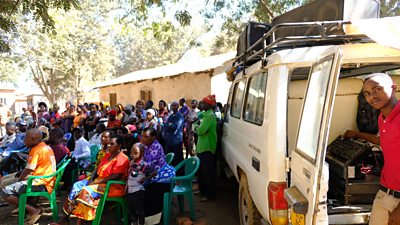
We strengthen democracy by supporting public interest media content and platforms that enable vulnerable people to participate in democratic processes as active and informed citizens who are better able to understand and address the biggest challenges they and the world are facing. -
A safer, more habitable planet
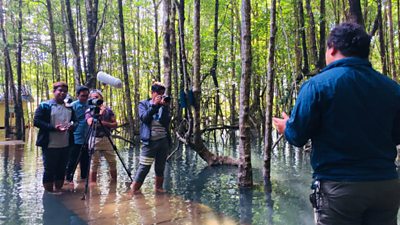
We contribute to a safer and more habitable planet by providing an information lifeline in humanitarian emergencies, by supporting information flows that help people adapt to climate change, live sustainable lifestyles and protect nature, and by supporting balanced discussion of conflict and division. -
More inclusive societies
By ensuring everyone has access to trustworthy information and fair representation, our work supports the UN SDG commitment to “leave no one behind”. We meaningfully include people who are often marginalised or excluded in society; addressing gender norms and barriers, the rights of people with disabilities and of LGBTQI+ communities, improving access to health, education and work opportunities.
Latest Insight stories
Search by Tag:
- Tagged with Insight Insight
- Tagged with Women and girls Women and girls
- Tagged with Leaving no one behind Leaving no one behind