HEALTH FEARS OVER
RAF RADAR
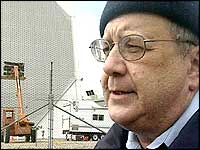 |
| Dr Richard Albanese fears the radiation's
effects |
A senior US Air Force scientist has told the
BBC he would not buy a house near Britain’s biggest radar base because
he fears its radiation could pose a serious health risk.
The role of RAF Fylingdales on the North York Moors is
set to be expanded under plans for President Bush’s new Star Wars missile
defence system.
But Inside Out can reveal that an almost identical base
on Cape Cod in the USA is at the centre of a $5m investigation into an
unexplained cluster of rare cancers in the local community.
Cancer fears
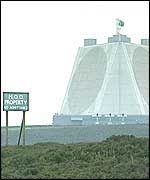 |
| Emissions from
Flyingdales are within legal limits |
In an exclusive interview, serving US Air Force researcher,
Dr Richard Albanese says he fears Phased Array Radiation from radars may
have carcinogenic properties that science has yet to understand.
What makes Dr Albanese’s claims more disturbing is that
he was a member of the medical team that first identified Agent Orange
- a defoliant used during the Vietnam war - as the cause of unexplained
cancers in American veterans.
He’s now running the Cape Cod tests, which were ordered
after local medical experts identified raised levels of breast and lung
cancer in young women near the Sagamore base, 70 miles from Boston.
Legal limits
Emissions from the radar, like those at Fylingdales,
are well within legal limits.
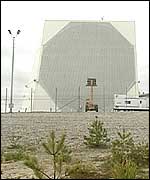 |
| Tests are being
conducted in Cape Code due to cancer clusters |
However, some researchers are now questioning whether
the complex waves of electro-magnetic radiation from Phased Array bases
should be subject to tighter regulation.
Some experiments have suggested they can actually damage
DNA.
Dr Albanese says, "Technology seems to lead our medical
understanding by somewhere between 10 and 20 years in almost every incident
I have worked on."
He compared his concerns to those over X-Rays, asbestos
and lead in fuel in the years leading up to scientific proof they could
damage health.
No known effects
There’s no evidence of a cancer cluster in the Fylingdales
area but the Yorkshire Cancer Register confirmed no research has yet been
done in the area.
The only known effect emissions from the base have is
on local motorists. Numerous breakdowns on the busy A171 are due to interference
with car alarms and immobilisers.
Resident’s anger
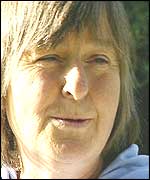 |
| Jackie and her
husband are considering moving |
Local campaigner Jackie Fearnley says she’s shocked by
Inside Out’s revelations from America.
These come only months after the Ministry of Defence
reassured local people that the British base was safe.
Jackie, who lives in Goathland, says, "My husband and
I have talked seriously about whether we go on living in such a place."
"We’ve seen the way America decides policy purely to
suit themselves and we are not necessarily going to be in very much control
or given much information."
"We really must ask, ‘is this the right thing for us?’"
Cape Cod campaigner Richard Judge warned people in Goathland,
"I would make sure the people in Britain understand they’ve been given
a system that may not be safe." |



