THE SHOTGUN GARDENER
 |
| Flowers are named after the revolutionary
gardener |
The peaceful Yorkshire Dales are not the likeliest
scene for a revolution.
But Inside Out’s Lucy Hester reveals that the
Dales were the location of a gardening revolution which shaped the
way we garden today.
The revolution was triggered by Reginald Farrer from
Clapham in North Yorkshire.
He was one of the most eccentric and bravest plant hunters
this country has ever seen.
In one infamous incident, Farrer loaded a shotgun with
seeds collected on his foreign travels, and fired them into a rock cliff
and gorge in his native North Yorkshire.
The lasting legacy is a spectacular display of plants
from the Himalayas which are today growing in a wild display around Ingleborough.
Pioneering botanist
Farrer helped change the face of gardening for good.
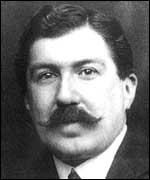 |
| Farrer made rock
gardening accessible |
In the early nineteenth century, only very rich Victorians
could garden for pleasure. They often had huge teams of gardeners and
passion for hothouses - little furnaces that forced bedding plants to
grow under vast acres of glass.
But Farrer ventured into the remotest parts of the Far
East including China, Japan and the Himalayas. He searched for new plants
and brought back precious seed that shaped and formed the British garden
today.
Farrer brought back plants that could be grown in a naturalistic
style - not just by the rich who could afford expensive hothouses and
personal gardeners.
Nicola Shulman, Farrer's biographer says, "He brought
rock-gardening into the hearts of the British people."
Adventurer
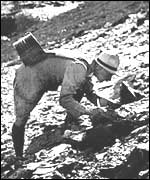 |
| Farrer collecting
seeds on a Chinese mountainside |
Farrer's trips became the stuff of legend. They were
very successful - he found, documented and painted many plants.
He nurtured them in a makeshift nursery on the mountain
slopes, bringing them safely back to Britain on his return.
Shulman says, "He was considered to be a maniac by most
people. He really was going to places where no westerners had been seen
before."
"It was very dangerous. There were warlords and bandits.
Not to mention disease."
Lengthily process
The trips were not simply exciting holidays for Farrer.
Shulman says, "He said himself that people have no idea
what goes into that little packet of seeds."
| FARRER FACTS |
|
Born 1880.
Died 1920 on a remote Burma mountainside on a
plant hunting trip.
Himalayan rhododendron, bamboo and other unusual
plants can be seen in Farrer’s Ingleborough display.
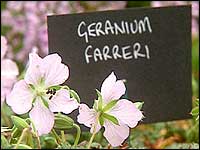
The plant Geranium Farreri is named after him.
He also wrote and painted about plants and gardening.
|
"You're on an uncharted mountainside and you have to
first of all find the Plant in the summer on the way up the mountain."
"Then in the autumn, you have to find the same plant
- if it hasn't been eaten or trodden on - hope it's set seed and that
the seeds haven't fallen yet - and this is just the start."
Legacy
Sadly Farrer's name is largely forgotten today, despite
his achievements.
But Inside Out travelled to the Chelsea Flower Show 2003,
and found Farrer's plants displayed among the best in show - meaning his
memory does live on in the most suitable way possible.
The Folly Museum in Settle, close to Clapham, is running
an exhibition about the life and achievements of Reginald Farrer. To find
out more, visit their website: The
Folly Museum
|



