 | "It's
rather fascinating that, maybe even as a corpse, he may be helping others..."
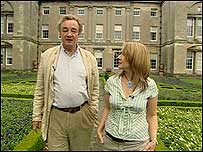
Christopher
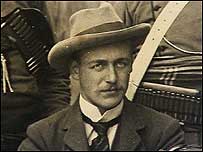
Simon Sykes | Sir Mark Sykes
- traveller, politician and advisor. |
Vital flu clueThe
body of a famous 20th Century politician may hold the clue to preventing a global
flu pandemic. Inside Out has found out that a worldwide flu epidemic could
be prevented by historic knowledge which has been uncovered. Sir Mark Sykes,
landowner, politician and diplomat died in France in 1919 of the Spanish Flu,
which killed 50 million people worldwide. A court has granted scientists
permission to exhume the body of the Yorkshire aristocrat who died nearly 90 years
ago from one of the world's deadliest viruses. Professor John Oxford, one
of the world's top virologists, believes Sir Mark was buried in a lead coffin
which could have preserved the virus. Flu pandemicHistorical researchers
from Inside Out have tracked down contemporary records of Sir Mark Sykes' funeral
at Sledmere Church and other archive documents to aid the medical team from St
Barts and the Royal London Hospitals. Experts believe Syke's remains will
help them piece together the DNA of the final stages of the pandemic flu, adding
to major breakthroughs by American scientists made in 2006. This knowledge
could help prevent a modern pandemic. Flu
fact file | A major global
flu pandemic killed more than 20 million people in 1918. In
1919 the Spanish Flu epidemic killed 50 million + people worldwide. The epidemic
was caused by an avian virus called H1N1 similar to the H5N1 bird flu today. The
"Asian flu" pandemic between 1957-58 was first identified in China.
The "Hong Kong flu" struck in 1968-69.
A new strain called
"Russian flu" was identified in 1977.
In 2005
two young Vietnamese boys died from a strain of influenza known as influenza A
H5N1 or 'bird flu'. |
Sir Mark was working for the Government
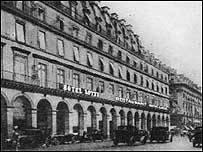
in the Middle East in the weeks before his death. He sailed home from Syria
via London, where it's thought he contracted the virus and died in a Parisian
hotel a few days later. Sykes had been tipped as a future Prime Minister
and helped draw up the national boundaries of the Middle East that still exist
today. Following the new research Sir Mark's grandchildren have had to give
their permission for an exhumation to take place. One of them, Christopher
Simon Sykes, an author, said: "We all agreed it is a very
good thing and it should go ahead. "It's rather fascinating that,
maybe even as a corpse, he may be helping others, as it were."
Exhumation
plans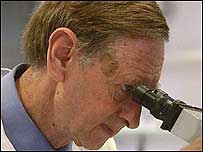 | | Professor
Oxford - hoping to answer key questions |
The Department for
Constitutional Affairs and the Health and Safety Executive will have to vet plans
for the exhumation, which has been authorised by a church court covering the Diocese
of York. The medical team would have to wear sealed suits with their own
air supply and work within a sealed inflatable tent. Air would also be
filtered to screen out any possibility of the virus escaping. Professor
Oxford told Inside Out: "If we can get samples, that will
be wonderful for my team and science in general. "It could help us
answer some very important questions. "We're on the verge of the first
influenza pandemic of the 21st Century and
we think Sir Mark can help us."
Fighting
bird fluSo a coffin nearly a century old could hold the secret to fighting
a worldwide flu epidemic as Inside Out's Ian Cundall explains: 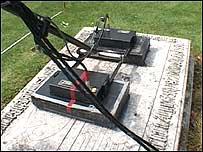 | | Radar
tests on Sir Mark Sykes' grave |
"We were
glad to put our researchers' skills to such a useful purpose. "We often
investigate incidents that occurred a long time ago but they rarely represent
such an immediate potential benefit."
Experts hope that
the exhumation of Syke's body will provide answers to questions about the treatment
of bird flu and other flu pandemics. Links
relating to this story:The BBC is not responsible for the
content of external websites | 


 Inside
Out - Yorkshire & Lincolnshire: Friday March 2, 2007
Inside
Out - Yorkshire & Lincolnshire: Friday March 2, 2007