BBC HomeExplore the BBC
This page has been archived and is no longer updated. Find out more about page archiving.

24 September 2014
Inside Out: Surprising Stories, Familiar Places

BBC Homepage
England
Inside Out
East
East Midlands
London
North East
North West
South
South East
South West
West
West Midlands
Yorks & Lincs
Go to BBC1 programmes page (image: BBC1 logo)

Contact Us

   Inside Out - Yorkshire & Lincolnshire: Monday November 6, 2006
Descent into Titan
Depths of Titan - a remarkable discovery

Titan - king of the caverns

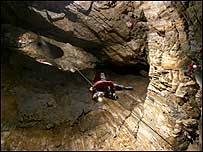
Potholers have discovered the UK's biggest cave beneath a hillside in the Derbyshire Peak District.

Titan is almost as high from floor to ceiling as the London Eye.

Inside Out shows the first film of the huge cavern, carved out over millions of years by water eating into the local limestone.

The Inside Out team led by presenter Morland Sanders and producer Mike Jackson abseiled into Titan with specialist cameraman Rob Franklin.

They were guided by Dave Nixon, a local potholer who is the UK's leading underground explorer.

He found Titan, the biggest underground discovery ever.

Huge chasm

Until now, Titan has only been within reach of the relatively small number of expert cavers who knew of its existence.

Inside Out's TV lights revealed a huge chasm containing a massive waterfall plunging deep below ground level.

Titan is nearly 200 feet higher than the previous record holder, Gaping Ghyll in the Yorkshire Dales.

"My breath has been taken away by the cathedral like magnitude of this awesome cavern… it truly is overwhelmingly beautiful".
Morland Sanders

Presenter Morland Sanders recalls seeing the cavern for the first time:

"It was in many ways a terrifying experience but the size of the cave is truly awesome."

Dave Nixon and a group of Peak cavers found Titan near another huge cavern, Leviathan, after finding an account by an obscure 18th Century academic, James Plumtree, in a university library.

In 1793 Plumtree wrote a paper which described a network of caves which went beyond the well-known Speedwell cave system near Castleton.

His account took him down the Speedwell Canal and deep into the mines, but his journal described a cave system that went far beyond what had since been explored

Mr Nixon realised the entrance must have been blocked by a rockfall and set out to find it.

When rocks were removed, the potholers opened the door on a long forgotten system that eventually led the group to Titan.

They spent three years removing another fall of boulders before finally gaining entry into the bottom of the cavern.

Mr Nixon's team has now completed a man-made shaft that allows cavers to reach the roof of Titan, from which they can abseil into the cave.

Wonders of the deep

The scale of Titan is immense - from floor to ceiling it's almost 500 feet, around the same height as the towers that support the Humber Bridge.

For Morland Sanders it was an amazing adventure:

"This has been an incredible experience.

"Any sense of fear or trepidation has been completely eclipsed by the colossal wonder of Titan's magnitude.

"Next time you're walking through the Peak District, just take a minute to consider the magnificent splendour that might exist just a few metres below your feet."

Links relating to this story:

The BBC is not responsible for the content of external websites

Inside Out Archive

Inside Out: Yorkshire & Lincolnshire
View our story archive to see articles from previous series.

BBC Where I Live

Find local news, entertainment, debate and more ...

Bradford
Humber
Leeds
Lincolnshire
North Yorkshire
South Yorkshire

Meet your
Inside Out
presenter
Jamie Coulson

Jamie Coulson
your local Inside Out presenter.

Contact us
Contact the Yorkshire & Lincolnshire team with the issues that affect you.

Free email updates

Keep in touch and receive your free and informative Inside Out updates.
Subscribe
Unsubscribe

New life for old skulls
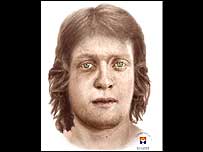
Peter Snow
Facial reconstruction - Peter Snow as he might have looked

We follow the story of two men who were executed 400 years ago.

For the first time, Inside Out reveals their faces with the help of modern reconstructive technology.

The skulls of the two men were found in a chapel at Hazlewood Castle, near Tadcaster 150 years ago.

They were the remains of Peter Snow and Ralph Grimston.

These two men, who were friends, were executed in York because they were Roman Catholics.

The Bishop is now bringing the two skulls from Hazlewood to a new resting at the Catholic cathedral in Leeds which is about to re-open after a year of restoration.

The skulls be replaced with exact replicas at Hazlewood.

Brutal death

So who were Peter Snow and Ralph Grimston?

Peter Snow lived in Ripon and was about 30-years-of-age.

He had trained in France as a Catholic priest.
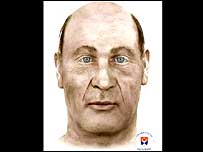
Ralph Grimston
Turning back time - Ralph Grimston 400 years ago

Ralph Grimston was married with a family, and was said to be a gentleman.

Both men spent years on the run from the law.

Finally, in May 1598, they were arrested and taken to York where they were tried for treason.

Within weeks of their arrest, they were sentenced to death.

On June the 15th, 1598, Grimston and Snow were executed at the Knavesmire in York.

Afterwards, their heads were cut off, stuck on spikes, and put on top of Micklegate as a warning to others.

Grimston had been hanged but Snow was hung, drawn and quartered.

Reconstructing the faces

No pictures of the two men have ever existed.

Using the latest techniques, Inside Out finds out what they really looked like.

At the University of Dundee, where their faces are about to be reconstructed, forensic artist Caroline Needham works out precisely how muscles attach to the skulls.

It's a combination of art and science - using precise measurements to see what the two men looked like.

Using computer images, real parts of the faces start to slot into place.

Soon, the skulls will have pride of place under the altar where they're about to reach their final resting place.

Links relating to this story:

The BBC is not responsible for the content of external websites

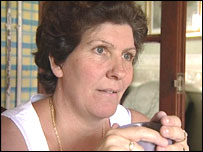
Meet a family of 15

Shirley Wilson
Desperate for more children - Shirley Wilson

Shirley Wilson has 13 children.

So why is she having fertility treatment?

Shirley Wilson loves being a mum so much she is desperate for more.

In fact she would like at least two more babies and says her need is as strong as if she were trying for her first.

"I want another baby 100%, I am just not ready to give up yet," Shirley told BBC Inside Out.

Shirley and her husband Mark live life in the fast lane with 13 children to look after.

They range in ages from 18 months to 20-years-old, and all of them still live at home.

"Yes it's hard work, everything is times 13", said Mark.

"But I would do it all over again. I wouldn't miss having 13 children for the world. It's great."

"I love the chaos; I love the running about, sorting them out. I just love it.

"It is so rewarding and I'm not ready to stop yet," adds Shirley.

Loads of work

Inside Out filmed the Wilson family over many months in Lincoln and the results provide a fascinating insight into BIG family life.

Up to 50 loads of washing get done a week.

They get through one washing machine, one dishwasher and one three piece suite a year through wear and tear ... and the weekly food bill tops £400.

But they loathe the "big family stigma".

Dad, Mark Wilson earns £30,000 a year as an electrician and supports his family. Our children, our responsibility, they insist.

Pregnancy quest

Inside Out followed Shirley's desperate quest to get pregnant again.

Surprisingly it doesn't come naturally for her. She had to take a fertility drug to ovulate every time.

After 13 babies and 12 miscarriages the couple were prepared to pay for IVF for baby number 14.

But Shirley is 45 and her age and the waiting lists were stacked against her.

Mark and Shirley told us that the best present they could hope for would be another baby.

Links relating to this story:

The BBC is not responsible for the content of external websites


About the BBC | Help | Terms of Use | Privacy & Cookies Policy