THE GREAT EGGCASE
HUNTThe British coastline gives us
a multitude of clues as to what lies beneath, so now Inside Out South
is inviting you to take part in the Shark Hunt. Get your buckets and
let's head for the beach! Some people say that we know more about the moon than
we know about the seas surrounding us. If that really is the case, then this call for recording
eggcases washed up on the beaches is a great way of learning more. Take a stroll and save marine life!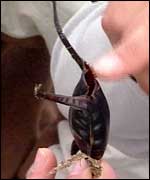 | | The baby ray emerges
from the small opening of the eggcase, all folded up |
As the beaches stretch for miles and miles, marine biologists
are looking for your help with shark conservation in the South. Shark Trust and Inside Out are calling on all, young
and old, big and small, to take part in The Great Eggcase Hunt. The Great Eggcase Hunt is particularly interested in
mermaid's purses, the empty eggcases of skates and rays. By collecting the mermaid's purses and sending off any
information to the Shark Trust, you can be helping
to map out the existing nursery grounds in the Southern area. Any information on the nursery grounds is important,
as skates and rays lay relatively few eggs. So if these areas are known,
they can be protected and monitored. | Elasmobranchs | Sharks, skates and rays are elasmobranchs, a group
of fishes with cartilaginous skeletons and five or more gill slits
on each side of their head A majority of the elasmobranchs are migratory,
moving from place to place Most of the elasmobranchs are predatory, but some
are scavengers and the largest in the group are plankton feeders. No fatal shark attack has been recorded in the
waters around the UK Source: The European Elasmobranchs
Association |
The Common Skate is now listed as endangered and much
work needs to be done in order to save these species. Skates and rays are close relatives of sharks. Over-fishing
has made the number of these groups of fish decline. When these animals reproduce, eggcases are laid on the
seabed, with each eggcase containing one embryo. It takes several months for this embryo to develop, and
when it does hatch, the little baby fish is very vulnerable. The empty case, which has nourished and protected the
infant skate for months, is often washed up on beaches. The size and shape of the eggcases vary depending on
the species of skate. What you can do to helpThe Shark Trust has an identification guide and resource
pack that tells you what it is you might have found and how you send in
the information to them. 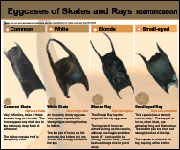 | Eggcases comes in all
shapes and forms
Copyright: Shark Trust |
The Shark Trust is a marine conservation charity that
has been promoting the safe management of sharks, skates and rays in the
UK since 1997. On the Shark Trust website, you can download a record
form that you can fill in. This information will be of great use to National Museums
and Galleries of Wales as well as the marine research community as a whole.
On the Shark Trust's The
Great Eggcase Hunt website you will find all the information on
how to recognise eggcases - you can even get tips on how you can organise
an eggcase hunt event together with your friends and family. So take to the beaches, even if summer's over. Remember
to put on warm clothes and be aware of the tide coming in - and have a
great eggcase hunt! |