BBC HomeExplore the BBC
This page has been archived and is no longer updated. Find out more about page archiving.

24 September 2014
Inside Out: Surprising Stories, Familiar Places

BBC Homepage
England
Inside Out
East
East Midlands
London
North East
North West
South
South East
South West
West
West Midlands
Yorks & Lincs
Go to BBC1 programmes page (image: BBC1 logo)

Contact Us

  Inside Out - South of England: Monday February 2, 2004

MENTAL HEALTH DILEMMA

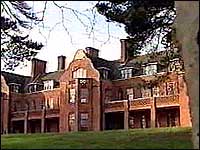
St Ann's Hospital
Alarm at absconding from Poole psychiatric hospital

An investigation by the BBC's Inside Out programme shows how dozens of mentally ill patients have absconded from a psychiatric hospital in Poole.

Inside Out examines security at St Ann's hospital and discovers that 13 detained patients walked out in 2003.

This was a reduction on 2002, when 46 patients absconded.

All of the patients had been sectioned under the Mental Health Act, which means the hospital has a legal duty to detain them.

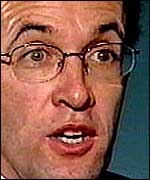
Laurence Mynors-Wallis
Mynors-Wallis, 'patients will leave who aren't supposed to'.

Patients are only sectioned if they are a serious danger to themselves or to others.

Hospital spokesman Laurence Mynors-Wallis tells the programme that some patients will always manage to abscond.

"We are not a prison, this is a hospital in which we are trying to get patients better. We are trying to balance the need for security with the need to provide a therapeutic environment.

"We take risks in trying to get patients well, sometimes the result of those risks is that patients will leave who aren't supposed to."

Julie Wills walked out of St Ann's on at least two occasions after being sectioned last year. She has borderline personality disorder and was detained because she was a danger to herself.

Her husband Ray tells the programme how he found Julie slumped across a table in a bar when she should have been in St Ann's.

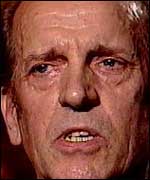
Ray Wills
Ray Wills' wife was lucky in coming to no harm

"The staff at the bar all knew her by name, so it was obvious to me that she was a regular visitor," says Ray.

"But she shouldn't have been allowed to leave the hospital because she was on a section."

Julie's condition has now improved and she is living back at their home in Kinson, Bournemouth

She wasn't harmed when she walked out of hospital, but not all absconding patients are so lucky.

University graduate Richard Boyle drowned after walking out of St Ann's. His mother tells the programme that Richard had been sectioned for his own protection.

"You assume that if you are putting your child into somebody's care, they are going to look after him," she says. "But St Ann's didn't look after Richard."

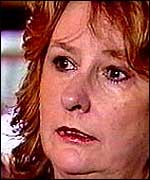
Yvonne Boyle
Yvonne Boyle, 'St Ann's didn't look after Richard

Nationally, almost 100 sectioned patients die each year because they haven't been properly cared for.

Marjorie Wallace, the chief executive of SANE, says security is poor at psychiatric hospitals across the country.

"It's a scandal that so many patients can walk out of the place where they are supposed to be getting the greatest care that society can offer."

The programme also highlights the case of a patient who was sectioned by a judge after he was convicted of taking hostages.

This patient is allowed to sit by the main entrance of the hospital each day, where there's no security.

The hospital can't comment on individual cases, but says that absconding rates at St Ann's are lower than at other psychiatric hospitals.

If you wish to get in touch with the Inside Out team
to share your experiences on the mental health issues raised in this report - please e-mail: insideout.south@bbc.co.uk

See also ...

Inside Out: South
More great stories

On bbc.co.uk
BBC: Mental Health

On the rest of the web
SANE
Nigel Turner - Mental Health Act
Mental Health Timeline
National Health Service
The Samaritans

The BBC is not responsible for the content of external websites

This week's stories

The Pilgrims' Way
Take a journey on one of the South East's most historic routes.

Cornish tea
Inside Out goes behind the scenes at Cornwall's tea plantation.

Storm chasers
Join the storm chasers in search of Yorkshire's worst weather..

More from Inside Out

Inside Out: South
View the archive to see stories you may have missed.

BBC Where I Live

Find local news, entertainment, debate and more ...

Berkshire
Oxford
Southampton
Meet your
Inside Out
presenter
Go to our profile of Chris Packham (image: Chris Packham)

Chris Packham
your local Inside Out presenter.

Contact us
Contact the South team with the issues that affect you.

Free email updates

Keep in touch and receive your free and informative Inside Out updates.
Subscribe
Unsubscribe


Readers' Comments

We are not adding any new comments to this page but you can still read some of the comments previously submitted by readers.

Inside Out South Team
Sue, The Inside Out team would very much like to talk to you about this. Could you please contact us at insideout.south@bbc.co.uk

Sue
We parents of people who end their lives in such tragic ways sometimes get a little comfort and support by talking to each other, we all get angry and we all try to make things change but nothing changes and these young and vulnerable people keep on dying.

What is worse is that nobody seems to care- mental health is not sexy. The only time there is any outcry is when some member of the public is harmed by a mental patient, meanwhile the poor patients are dying and until someone like you draws attention to it nobody notices. Are our children less than human, don't their lives matter?

Gary Hughes
The programme focused on the worst possible senarios concerning patients that have absconded. what about those whos lives have been not just bettered, but saved saved by St Anne's?

I went into st annes 8 years ago weighing 4 1/2 stone and geeting worse. St annes saved my life, the staff there were brilliant and deserve praise not negetive critism.

Ray Metcalfe
Inside Out is a superb programme and this item has been one of it's most excellent items. Thank you Chris.

Mrs Bell
I felt compelled to respond to your feature this evening. I myself work within the mental health services, although I feel there are positive changes that can be made to the system, I believe that your feature was incredibly biased and mis informed.

For example, you failed to mention that when service users are on a section, as part of their planned care to be reestablished within the community they are entitled to leave from the ward if it is deemed safe and appropriate to do so.

Towards the end of the feature the presenter made a very flippant comment stating that 2 service users die a week whilst under section due to lack of care!!!! I would be interested to know where the factual information came from for this comment.

This feature continues to reinforce the negative image of mental health, insisting that people should be kept under lock and key. The comments completely undermine the valuable work that I and other mental health professionals try to undertake each day. I hope that in the future your features may be more balanced and representative of the wider community.

Anonymous
The vast majority of people detained on a section (including sections 2 & 3 the most common)have 'Section 17 Leave' granted by their consultant. This entitles them walk off the ward (after signing a piece of paper) for a set period of time each day. This idea that there are 'sectioned' patients 'escaping' and running riot all over the country is ridiculous.

If a person without leave DOES abscond, (which is rare, and normally due to a technicality such as them not signing out) then the police are always contacted immediatly, and they then begin a search for that person. Staff cannot normally be permitted to leave the ward themselves for reasons of safety.

My sympathies go out to the families of those who have lost their loved ones due to a mental illness. Safety is of course always paramount and detailed risk assessments are always carried out before leave is granted. A balance between protecting people and maintaining patient's human rights is always strived for.

People are always detained in the least restrictive environment possible in order to improve their chances of getting better. Unfortunately things sometimes go wrong, risk assessment is not an exact science. These people are human beings, it is vital that we started treating them as such.

Simon Walker
Your program was an over-dramatised simplification of what is an extremely complex set of issues. Confinement versus treatment in a relatively open environment is the crux of the problem facing those who treat mentally ill patients.

If we were to lock up all those who have been sectioned, then the accusation of returning to a Victorian-type ethos would be levelled. We could, as a society, of course return to a "lock them all up" policy. Is this really what we seek ... and what about Human Rights?


About the BBC | Help | Terms of Use | Privacy & Cookies Policy