MIGRATORY BIRDS
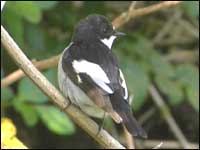 |
| Birds travel thousands of mile to reach the UK |
Every year millions of birds travel hundreds or even thousands of miles to the UK to breed.
Chris Packham looks at bird migration with a visit to one of the south's top birdwatching sites.
Wildlife is almost constantly on the move. It's not just birds that migrate - fish, butterflies, and whales do it too. But bird migration is truly extraordinary.
One seabird, a manx shearwater, first caught and ringed in the UK in 1957 was re-captured this year.
Birdwatchers believe that over the last 46 years it has probably flown more than five million miles!
Home and away
Birds migrate to improve their chances of survival.
They move to places that offer a good supply of food and a better chance of rearing more young.
But it's a risky business as migration hazards range from storms to starvation.
Fast mover
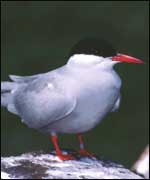 |
| The Artic Tern travels furthest on migration than any other British bird - around 10,000 miles |
When birds arrive on our coast they don't hang about.
One wood warbler ringed on the Isle of Man was re-captured the following morning near Glasgow. By the evening it had attracted a mate and was building a nest.
The sight of so many seemingly fragile birds arriving along the coast never fails to impress Chris.
"When you actually see these tiny birds that have crossed continents and avoided catastrophe arriving in a garden near you, the pure science fades away leaving a simple sense of amazement," says Chris.
Under observation
The Portland Bird Observatory on Portland Bill, Dorset, is one of sixteen recognised observatories in the UK which study migration and bird movements.
Many birds make a bee-line for Portland Bill as it juts five or six miles into the English Channel and it's the first land they see.
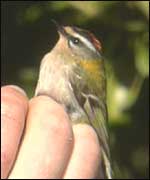 |
| Even fragile birds like the Firecrest make the long flight to UK shores |
Birdwatchers have been ringing birds at the observatory since the 1950s and so far more than 150,000 birds of 185 species have been caught.
Individuals ringed at Portland have later been recovered in Finland, Ghana and the Republic of Georgia in the former USSR.
Warden, Martin Cade reckons he has one of the best jobs in the world.
"It's just such a buzz and it's different every day," explains Martin.
"You never know whether there's going to be a good fall of migrants or a good sea-watch or there could be swallows streaming through to be counted."
Ship ahoy!
Portland is also the place where sea-watchers gather to look for sea birds as they sweep along the coast.
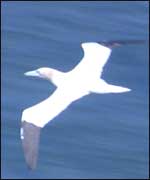 |
| Sea-watchers make a bee-line to Portland as sea birds like the Gannet sweep along the coast |
For Portland bird watcher Colin White sea-watching is his passion.
"It's not the rare birds for me, I like to see the passage birds. I like to see lots of birds," he says.
"We have had 2,000 manx shearwaters go past here in an evening. That to me is birdwatching."
Although the spring migration is over, Portland will be buzzing with birds again in the autumn as they begin their return journey.
"Portland Bill is a migration magnet not just for the birds but also for birdwatchers," says Chris.
"If you fancy an exotic or a rarity then a trip to Portland is probably your best bet." |



