
The War at Sea: 1914 - 1918
By Dr Eric Grove
Last updated 2011-02-17
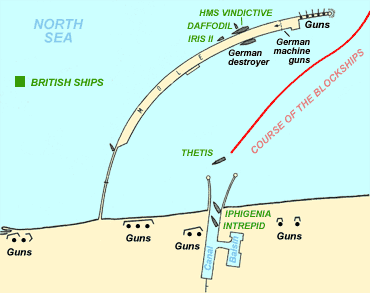
The Zeebrugge Raid
The Zeebrugge Raid, 1918 Zeebrugge was an outlet for German U-boats and destroyers based up the canal at Bruges, and the British planned to sink three old cruisers Iphegenia, Intrepid and Thetis, in the channel to block it. These would have to pass a long harbour mole (a causeway or pier), with a battery at the end, before they were scuttled. It was decided therefore to storm the mole using another old cruiser, HMS Vindictive, and two Mersey ferries, Daffodil and Iris II, modified as assault vessels. Two old submarines were to be used as explosive charges, under the viaduct connecting the mole to the shore.
The attack went in on the night of 22-23 April, under the command of Commodore Roger Keyes. Vindictive was heavily hit on the approach, and came alongside in the wrong place. Despite much bravery by the landing party, the battery remained in action. One submarine did succeed in blowing up the viaduct, but the first block ship was badly hit and forced to ground before reaching the canal entrance. Only two (Ipheginia and Intrepid) were sunk in place.
Much was made of the raid. Keyes was knighted, and 11 Victoria Crosses were awarded. The Germans, however, made a new channel round the two ships, and within two days their submarines were able to transit Zeebrugge. Destroyers were able to do so by mid-May.
World War One Centenary

- Find out more about how the BBC is covering the World War One Centenary, and see the latest programmes and online content
Surviving the trenches

Pack Up Your Troubles

BBC iD
BBC iDBBC navigation
BBC links

BBC © 2014 The BBC is not responsible for the content of external sites. Read more.
This page is best viewed in an up-to-date web browser with style sheets (CSS) enabled. While you will be able to view the content of this page in your current browser, you will not be able to get the full visual experience. Please consider upgrading your browser software or enabling style sheets (CSS) if you are able to do so.
