
Victorian Mugshots Gallery
By Steve Jones
Last updated 2011-02-17
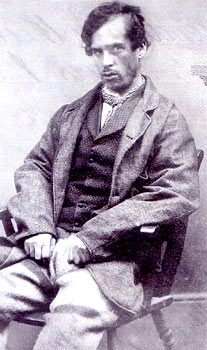
Joseph Smedley
- Where to find Victorian mugshots
- Police and prison records, whose photos and details were mostly of the poorer classes, are of tremendous importance to filmmakers, historians and writers. Their main interest, however, is probably to genealogists trying to piece together their family tree who encounter a major problem in that their ancestors wished to remain anonymous and therefore used many aliases, and are thus hard to trace.
Mugshots of our forebears are an untapped source of family history. If an ancestor is missing from the census, has been cut out of a photo or never mentioned by anyone in the family, it might be worth a call to the local archives to see if they hold any mugshots.
Some genealogists may be disappointed to discover that they had criminal ancestors, but surely most would dearly love to track down a real photograph of great-uncle Albert – even if garbed in a suit of arrows.
Researching crime reports in Victorian newspapers can be depressing. There were no state benefits and only meagre handouts were available from churches and charities. Life was so harsh that some preferred the certainty of meagre rations in gaol than starvation outside. In Yorkshire in 1861, Joseph Smedley, along with an accomplice, set fire to a stack of straw and calmly awaited the arrival of the police. The two men wanted to be gaoled because, as they told their captors, they were hard up and wanted to get into prison. Sent down for seven years, Smedley, doubtless to his dismay, was released eighteen months early.
Many reports from prison memoirs confirm that visitors often envied the secure regime and guaranteed swill of those they called upon.
Given the brutishness of existence and shortage of funds, who would begrudge their great-uncle Albert a little stolen sausage?
British History Timeline

World War One Centenary

- Find out more about how the BBC is covering the World War One Centenary, and see the latest programmes and online content
Surviving the trenches

The History of the Home

BBC iD
BBC iDBBC navigation
BBC links

BBC © 2014 The BBC is not responsible for the content of external sites. Read more.
This page is best viewed in an up-to-date web browser with style sheets (CSS) enabled. While you will be able to view the content of this page in your current browser, you will not be able to get the full visual experience. Please consider upgrading your browser software or enabling style sheets (CSS) if you are able to do so.
