
Mesopotamia
By Dr Dominique Collon
Last updated 2011-07-01
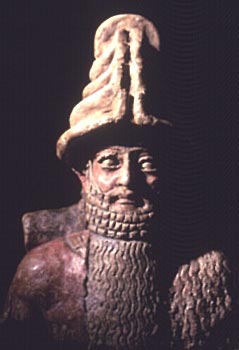
Clay figure of a god
From about 2,100 BC, Amorites from the desert began moving into Iraq from the west, and settling around the cities. In about 2,000 BC they contributed to the overthrow of the dominant Third Dynasty of Ur, and established a series of small kingdoms all over Mesopotamia. Under King Hammurabi (1792-1750 BC), the First Dynasty of Babylon gained control of much of Mesopotamia, and Babylon became the capital.
Hammurabi's Babylon is inaccessible, lying beneath the ruins of later cities - including that of Nabuchadnezzar II (504-562 BC). At Ur, however, Sir Leonard Woolley found this impressive painted clay figure from the time of Hammurabi. Its horned head-dress identifies it as a god, seated upon a black high-backed throne. Only the upper part survives (height 18cm), but traces of a weapon resting on the figure's left arm may indicate that he is a warrior god.
Hands on History: Ancient Britain

Hands on History: Roman Britain

BBC iD
BBC iDBBC navigation
BBC links

BBC © 2014 The BBC is not responsible for the content of external sites. Read more.
This page is best viewed in an up-to-date web browser with style sheets (CSS) enabled. While you will be able to view the content of this page in your current browser, you will not be able to get the full visual experience. Please consider upgrading your browser software or enabling style sheets (CSS) if you are able to do so.
