|
Ive
never been totally interested in poetry, its always
seemed far too confusing and frustrating to me. I think this
is maybe because of the limited choice of poetry we study
at school and how its force fed to us - cant help
but think some poets didnt actually want us to look
that deep into the poem and analyse it so much!
However,
once I understood all my A Level poetry, I began to love it
- as I felt the issues raised were extremely important and
apparent in ones life and society.
Local
poet
When
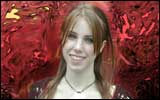
I heard about local poet, Paul Horn, I was intrigued to find
out more about his work and what he was all about. At the
age of 18 hes already had poems published and was a
runner-up for the University of Central England (UCE) Poetry
Prize.
His
work is also expressed in his dark and different
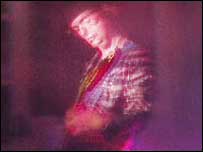
band The Trauma, in which plays the bass and writes lyrics.
He is hoping to extend his talent for writing even further,
as he goes on to study English at the University of Birmingham
in September. Read my interview with Paul below for a glimpse
of how he expresses life
When
did you first start writing poetry?
I
dont really know what started me, or when I started;
I just wrote, painted, and expressed myself from the time
when I was quite small. I wrote my first published poem when
I was 9 years old, when it came out in a compilation of schoolchildrens
poetry, and I suppose things just developed from there.
What
encouraged/inspired/influenced you and what made you stick
at it?
Firstly,
I dont know if Id be writing poetry as I do now,
if I hadnt been writing lyrics for various local rock
bands for a while. I think I wanted to be a rock star long
before I envisaged myself as a poet. I still do
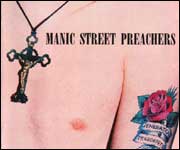
really! I think when I bought the first Manic Street Preachers
album, that was a real nodal point for me.
He
[Richey] was so fragile and beautiful, and I was just transfixed
by the glamour, intelligence and vitality of it all. So when
I started my first band, everything I wrote was wildly Richey-esque.
I wanted to be some ungodly cross between Richey and John
Lennon, and save the world with a song. Whilst that dream
has long since evaporated, the point is that they turned me
on to verse as an art form, and that was to prove a useful
thing.
And,
however crass this might sound, poetry has been good therapy
for me too. When I was going through a particularly tough
time about a year ago, as my friends, and people who know
about my band will know, I turned to some pretty bad methods
to deal with things. Not being the sort of person who screams
and shouts his feelings, I was searching for a way to externalise
my inner pain, to purge it from my body, as it were, and make
it real.
It
was then that I really started reading poetry. When I discovered
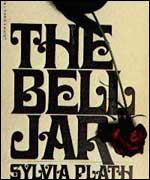
Sylvia Plath that was another nodal point for me, as her poems
completely stunned and astounded me. The self-destructiveness
and tragedy, and the tenderness and revelation
Wow!
Here was someone who was only truly happy when writing. From
this point it all became more cathartic for me; I wrote a
lot of autobiographical material in a short period
of time, and poetry provided effective escapism for me.
Do
you tend to write your poems for a certain audience, or is
it mainly for yourself?
I
think it would be a bit pretentious of me to say that I write
poetry for an audience, since theyve probably been read
by a relatively small number of people.
There
is a difference between writing poetry and writing lyrics
for a rock band though
For The Trauma I have to consider
the listener, who doesnt have the time to ponder the
words as someone reading poetry does there has to be
a degree of immediacy to it. I just try to write the words
that I would like to read/hear.
Do
your poems follow a particular theme, or express certain messages?
I
dont really have any conscious master plan or message
to get across. There was a time when to nail my political
colours to the mast was everything to me, but I realised that
Im more interested in people than ideas
I try
to write about human issues, human fears; and keep the personal
touch of my work without getting too self-involved. I dont
think poetry should be a mirror-looking, narcissistic experience
- it should be relevant to other peoples experiences.
Click
here to read the rest of the interview
If you have suggestions about any Gloucestershire arty things I can write about, send them to me via e-mail below:
gloucestershire@bbc.co.uk
 |