User Rating

Ordinarily, Ken Loach films champion the cause of the working masses but only appeal to an intellectual elite. An exception to the rule is The Wind That Shakes The Barley starring Cillian Murphy. It fared well at the UK box office and won Loach the coveted Palme D'Or despite some stinging criticism at home for his sympathetic portrayal of Irish guerrillas pitted against the British in the 20s.
Written On The Wind
In case anyone feels that Loach didn't do his homework, the director invites historian Donal O'Driscoll to join him in a commentary for the film. His input was much valued by Loach during the shoot (he says they spoke every day) and O'Driscoll offers plenty of insights into the growing friction between Irish locals and the dreaded Black And Tans (the British military police). "It wasn't personal," he says, "It was a matter of policy that they used to terrorise communities seen to be sustaining the rebels."
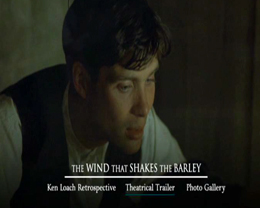
On the matter of why he chose to tackle such a sensitive subject, Loach explains that it's the impact of "big events" in awakening people to "big ideas" that usually attracts him to a story. He also insists that his films are primarily focussed on the human experience rather than being an excuse to spout socialist ideals. Of course he has been criticised for letting politics overtake in this case.
Shaking Things Up
Cillian Murphy, Peter Mullan and Robert Carlyle are among those who discuss Loach's life and work in the engaging documentary Carry On Ken. The title hints at Loach's affection for Carry On films and is a cue to reminding moviegoers that he does have a sense of humour, which often isn't commented on in reference to his work. The man himself says that comedy is "integral" when tackling difficult subjects although there's not much of it in The Wind That Shakes The Barley.
In an extended discussion of The Wind, Murphy talks about the freedom Loach affords his actors and recalls his embarrassment on the first day of shooting when asking for his "mark" (the chalk line that denotes where an actor should stand). Cameras also go behind the scenes, but have trouble keeping up with a sprightly Loach as he jogs up and down the rain-swept hills of County Cork. Later on he explains the ways in which "politics inform your aesthetic of filmmaking," eg how framing a person can encourage empathy for a character or objectify them. Of course what he doesn't talk about is the way that the British characters here are kept at a cool distance, tipping the story off-balance.
Whatever your feelings about the film, there is no denying that Loach has a deeply felt passion for his work. That comes across on this DVD whether talking about his political philosophy or his practical approach to filmmaking.
EXTRA FEATURES