After years of collaborating on comic books and graphic novels, writer Neil Gaiman and designer/director Dave McKean brought us the "dazzlingly original" MirrorMask. Young newcomer Stephanie Leonidas stars in this visually arresting fantasy fairytale, which delighted some but bewildered most. Ultimately, McKean's bold approach to moviemaking did not translate into big ticket sales.
Through The Looking Glass
The making of the film is split into eight featurettes beginning with writer Neil Gaiman referring back to previous collaborations with McKean. He talks about the "puppets of memory" from childhood that influence his writing and in a separate interview McKean explains that silent horror movies were "the most important influence" in his vision of the world. "It's like being in one of your fantasies when you're a kid," says Leonidas of her experiences on set in the Cast And Crew featurette. She's joined by Rob Brydon (playing her dad) who expresses surprise that McKean is so "open to suggestions" despite having very specific ideas about what will appear on screen.
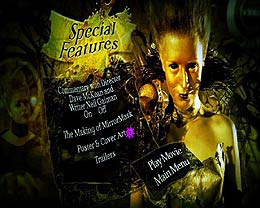
Day 16 is a time-lapse video showing the flurry of activity that makes up one day of shooting on a blue screen set. It's complemented by Flight Of The Monkeybirds, which reveals all the stages of production albeit briefly. The footage shot against a blue screen is combined with digitally crafted ‘Monkeybirds' that are choreographed using pre-visualisation ie, CG storyboards. It's obviously a very involved process and at one point, McKean remarks to Gaiman, "I think we should be doing a kitchen-sink drama..." Similarly, the Giants Development featurette showcases the initial concept art and first digital renderings.
Behind The Mask
A 20-minute Q&A is patched together from the San Diego Comic Convention and Sundance Film Festival and provides lots of handy hints for budding filmmakers. McKean reckons anyone can make a visually impressive film if they have the right computer software. As far as generating ideas, he explains that this film was the result of "a great, long rambling dream." According to Gaiman, the execs at Sony viewed it more like, "Jean Cocteau's Beauty & The Beast on acid - for kids." The duo also reveal a few of their working practices and it may surprise some to hear that before MirrorMask they'd never worked in a room together.
McKean and Gaiman do share the same space for a jovial commentary. It's not as technical as you might expect although Mckean does chat casually about production design and the challenges of matching the lighting on the actors to that of a digitally created environment. They also explain where some scenes were deleted eg, the opening was shot in split-screen, but this was eventually scrapped because it created an "emotional distance" from the characters.
Since the digital effects were pivotal, it's disappointing that there isn't more detailed insight into this area. Still MirrorMask could well be a cult hit on the small screen and the extras on this DVD nicely reflect the passion of the filmmakers.
EXTRA FEATURES