|
|
 |
 |
|
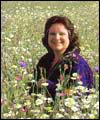
Marney
Hall
|
As
one of the country's leading experts in the recreation and restoration
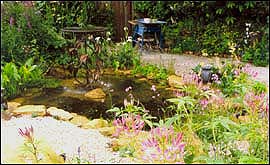
of natural habitats, Marney Hall's wildlife gardens have attracted
wildlife and an armful of prestigious awards.
Marney,
who lives in St Ives, has also been described by Country Life magazine
as 'a living national treasure'.
She
says: "A
lot of people think they're not artistic, but if they garden, they
are. It's a creative outlet and important to everybody."
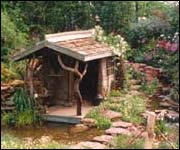 |
| The
Quarryman's butterfly garden, designed by Marney in 1998 won
the prestigious Chelsea Flower Show Gold Medal |
She
admits that she regards gardening as a means of connecting with
nature.
For
Marney, creating spaces that attract and encourage new species of
wildlife are particularly important and rewarding.
She
says: "One
of my favourite sites was a concrete sugar beet loading bay in Norfolk.
It was full of scrapped cars and chemical cans.
 To be able to convert something that was worthless to wildlife
is very rewarding
To be able to convert something that was worthless to wildlife
is very rewarding  |
| Marney
Hall, wildlife gardening expert |
"Now,
it is now the most amazing wildflower meadow, with something like
22 species of butterfly, with barn owls, bats and tawny owls and
loads of lovely birds like spotted flycatchers. To
be able to convert something that was worthless to wildlife is very
rewarding."
How
to attract wildlife to your garden
- Nesting instincts
Structure and shelter in your garden,
and bushes or hedgerows will make excellent safe nesting sites
for birds.
- Feeding time!
Put out bird feeders, especially from late autumn to early spring.
Give them seeds, specialist bird food, peanuts or fat-balls.
- Fabulous
fruit
Grow
plants that produce lots of fruit, nuts, seeds and berries such
as oak, apple and teasel.
- Rotten
stuff
Leave
piles of rotting matter to attract insects, such as wood, fallen
fruit and nettles.
- Long
and short
Keep grass short for birds to forage, and long grass to provide
cover for insects and small mammals.
 |
|
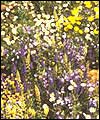
keep
it wild!
|
- Fresh
water
Put some water in a lid or shallow pot for birds to have a bathe.
- Pond
pleasure
Create a wildlife pond to attract frogs, toads and insects. Make
sure you plant water plants around the edges so they can get in
and out!
- Let
it grow
Leave a patch of your garden untouched, perhaps a space behind
a shed or garage, where plants can grow wild and small mammals
can shelter.
- Sow
the seeds
Plant wildflower seeds in your borders next summer. Many seed
packets offer a variety of flower species that attract butterflies
and bees and look beautiful at the same time.
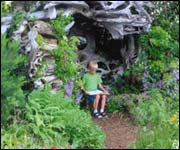 |
| A
place to relax: Marney's driftwood garden at Hampton Court,
2001. |
|