|
|
 |
Here is
your RSPB guide to caring for garden birds – what and when to feed
them and details about creating ponds. Enjoy yourself!
Feed them...
seeds and household foods such as bread, pastry, cheese and bacon
rinds. Don’t forget to put some on the ground for birds such as chaffinches.
Water...
is important to all birds for drinking and bathing. A shallow birdbath
or upturned dustbin lid is ideal. Make sure you keep water ice-free
in winter and replace water daily in the summer months.
Winter tips
 |
|
Photo:
Chris Gomersall and rspb-images.com
|
- put out food and water on a regular basis
- use good quality seed mixes with lots of millet and sunflower
seeds
- bread is great too – even if it is mouldy – but moisten if it
is dry
- try ‘bird cake’ – pour melted suet or lard onto a mix of seeds,
nuts, cake or dried fruits (1/3 fat to 2/3 mix), mould and cool.
Spring/Summer tips
- avoid fatty foods in summer – they can harm young birds
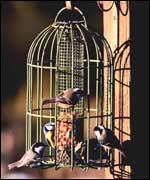
- put peanuts in rigid mesh – whole nuts can choke young chicks
- fresh fruit is always a hit with birds and insects
- birds adore dried fruit, such as raisins, sultanas and currants
- make sure the fruit is soaked and softened for chicks in summer.
Bird
feeders
Tables should be kept clean, using a mild disinfectant. If possible,
move your feeding station several times a year to prevent disease.
Homes for birds
Nest boxes should be kept out of reach of cats, two to five metres
above ground. The hole in the box should be around 30mm across for
small birds.
Ponds
Ponds
are wonderful for wildlife. No matter what size, they will provide
food and homes for many birds and other wildlife. Warm, sunny sites
are best and ponds should be lined with polythene or butyl rubber.
It is best to allow the pond to stock itself, but if you can’t wait
for nature to take its course, plant native species, such as yellow
iris. A low branch or log in the middle will help birds to drink
and bathe safely. Don’t dig your pond under a tree – you’ll spend
a lot of time cleaning out leaves!
Planting gardens for birds - trees and shrubs
Native trees are best as they provide insects, seeds and shelter.
Alder, birch or willow are suitable for gardens – oaks and beech
can grow too big. Shrubs, such as hawthorn and holly provide shelter
and food.
Native plants
Cornflowers,
forget-me-nots, evening primrose and sunflowers are a good choice.
All of these provide fruit or seeds that are attractive to garden
birds. Climbers, such as honeysuckle and clematis, can provide great
nesting sites.
Lawns and rockeries
Birds, such as blackbirds and starlings, spend time on mown lawns
in search of earthworms and other invertebrates. A rockery is often
home to snails – a favourite with song thrushes, providing food
in dry summer weather.
We've got some useful free pamphlets from
the RSPB if you'd like to know more about caring for
the birds in your garden.
Feeding
Garden Birds
All About Bird Tables
Birds and Water
If you'd like any of these leaflets, please contact the BBC
Cambridgeshire Action Desk:
Tel: 0845 300 1090
Email: cambs.action@bbc.co.uk
Or write to:
BBC Cambridgeshire Action Desk
104 Hills Road
Cambridge
CB2 1LD
|